Showing posts with label Radiation risks. Show all posts

Thursday, June 30, 2011

Design problems, hazardous construction plague Lynas plant, reports NYT

Design problems, hazardous construction plague Lynas plant, reports NYT

TMI, June 30, 2011

KUALA LUMPUR, June 30 — The controversial Lynas rare earths refinery in Kuantan is plagued by environmentally hazardous construction and design problems, the New York Times has reported, citing internal memos and current and former engineers on the project.

The report published today said the issues, including moisture in humid Malaysia, could potentially affect the RM700 million Lynas Corp plant being built to challenge China’s stranglehold in the key rare earths industry.

Malaysia is due to announce today the results of an independent international review of the plant that is scheduled to open this September. The listed Lynas Corp has asked for a halt in its share trading in Australia today pending the report.
Signboard showing the site of the Lynas plant under construction in Gebeng, Kuantan. — File pic

In a report headlined “The Fear of a Toxic Rerun” by Keith Bradsher, the New York Times reported that Lynas officials contend that the refinery being built here is safe and up to industry standards, and say that they are working with its contractors to resolve their concerns.

“All parties are in agreement that it is normal course of business in any construction project for technical construction queries to be raised and then resolved to relevant international standards during the course of project construction,” wrote Matthew James, an executive vice-president of Lynas, in an e-mail last night.

But the construction and design may have serious flaws, the engineers told New York Times, and provided proof through memos, e-mail messages and photos from Lynas and its contractors. The engineers said they felt a professional duty to voice their safety concerns, but insisted on anonymity to avoid the risk of becoming industry outcasts.

“The problems they detail include structural cracks, air pockets and leaks in many of the concrete shells for 70 containment tanks, some of which are larger than double-decker buses,” the paper said.

Lynas is mining rare earths ore deep in the Australian desert and shipping to Malaysia to be mixed with powerful acids to make a slightly radioactive slurry that would be pumped through the tanks, with operating temperatures of about 200 degrees Fahrenheit.

The engineers say that almost all of the steel piping ordered for the plant is made from standard steel, which they describe as not suited for the corrosive, abrasive slurry. Rare earths refineries in other countries make heavy use of costlier stainless steel or steel piping with ceramic or rubber liners, the paper said.

“The engineers also say that the concrete tanks were built using conventional concrete, not the much costlier polymer concrete mixed with plastic that is widely used in refineries in the West to reduce the chance of cracks.

“Documents show that Lynas and its construction management contractor, UGL Ltd of Australia, have argued with their contractors that the cracks and moisture in the concrete containment walls are not a critical problem,” according to the report.

Memos also show that Lynas and UGL have pressed a Malaysian contractor, Cradotex, to proceed with the installation of watertight fibreglass liners designed for the containment tanks without fixing the moisture problem and with limited fixes to the walls. But Cradotex has resisted, the paper reported.

“These issues have the potential to cause the plants critical failure in operation,” Peter Wan, the general manager of Cradotex, said in a June 20 memo obtained by New York Times.

“More critically the toxic, corrosive and radioactive nature of the materials being leached in these tanks, should they leak, will most definitely create a contamination issue.”

Wan said in a telephone interview with the New York Times on Tuesday that he believed Lynas and UGL would be able to fix the moisture problem but that he did not know what method the companies might choose to accomplish this.

The fibreglass liners are made by AkzoNobel of Amsterdam, one of the world’s largest chemical companies. AkzoNobel says it, too, worries about the rising moisture.

“We will not certify or even consider the use of our coatings if this problem can’t be fixed,” Tim van der Zanden, AkzoNobel’s top spokesman in Amsterdam, wrote on Monday night in an e-mail reply to questions.

Memos show that the refinery’s concrete foundations were built without a thin layer of plastic that might prevent the concrete pilings from drawing moisture from the reclaimed swampland underneath.

The site is located just inland from a coastal mangrove forest, and several miles up a river that flows out to the sea past an impoverished fishing village.

An engineer involved in the project said that the blueprints called for the plastic waterproofing but that he was ordered to omit it, to save money. The plastic costs US$1.60 (RM4.80) a square foot, he said.

Lynas disputes that the design ever called for using the plastic.

Nicholas Curtis, the executive chairman of Lynas, said in a telephone interview from Sydney on Monday that the project here met local environmental standards and that he believed those were consistent with international standards.

“I have complete confidence in the Malaysian environmental standards and our ability to meet the requirements,” he told the New York Times.

Engineers at the project said that Lynas officials had whisked the international inspectors through the factory in a single morning, partly because of security concerns about protesters outside the refinery gates. The team had little chance to examine the refinery’s structure, the engineers said.

Wednesday, June 29, 2011

Protecting Children from Radiation Exposure..... Produced by the SAY-Peace Project

Protecting Children from Radiation Exposure
 
Produced by the SAY-Peace Project
Editorial Supervision by Dr. Matsui Eisuke, Gifu Environmental Medicine Research Institute
Translation by John Junkerman
 
Introduction: Our Basic Stance
The accident at the Fukushima Daiichi nuclear power plant that occurred after the Great East Japan Earthquake on March 11 has released large amounts of highly radioactive material into the air, sea, and soil, and it continues to affect our lives. Young children are particularly susceptible to the effects of radiation. In order to protect children from exposure to radiation, pregnant women and parents of small children are required to exercise caution in their daily lives and to act on the basis of accurate information.

The government has made announcements such as “There is no immediate danger to health” and “We have established safe standards.” But there has been little effort to explain the mechanisms of radiation exposure (in particular, the internal exposure from breathing, eating, or drinking contaminated matter), and no attention has been paid to the danger of delayed effects that may appear in 10 or 20 years.

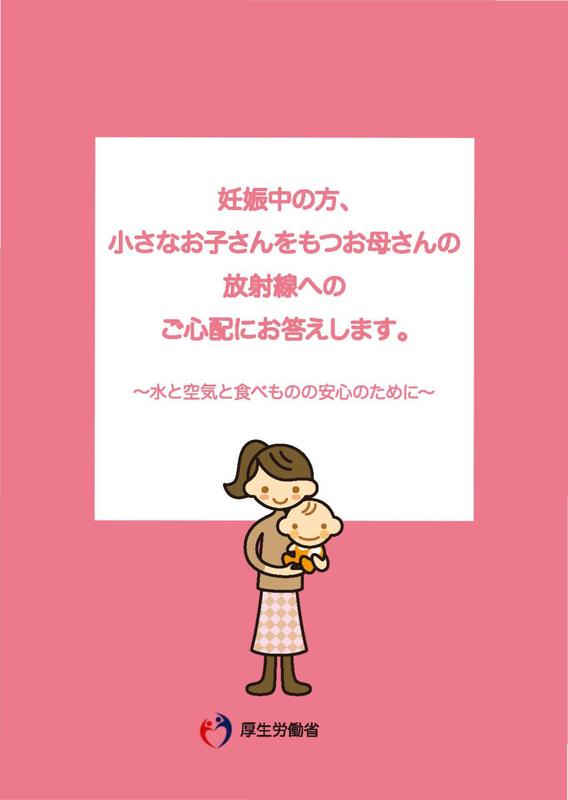
Many specialists in radiation medicine have pointed out that the standards for exposure that the government has set cannot be considered “absolutely safe.” Nonetheless, a pamphlet published on April 1 by the Ministry of Health, Labor, and Welfare assured pregnant women and the mothers of small children that “there is no need to worry,” without providing any scientific basis for the claim. This is the height of irresponsibility. (The photo at the right is the cover of the pamphlet.)

There are still many things we do not know about the physical effects of radiation, but this lack of understanding should not lead us to relax. Rather, it is important to maintain this stance: since we do not know, we should exercise the utmost caution, and avoid exposure to radiation to the furthest extent possible.

We hope this pamphlet will be of use in protecting children from exposure to radiation.


What is Radioactivity?
“Radioactivity” is the ability to emit radiation, and substances with that ability are called “radioactive substances.” Radiation takes the form of rays that are able to pass through matter. Through a process called “ionization,” they can damage the cells and DNA that make up the human body, resulting in a variety of physical effects. One of the insidious features of radiation is that it cannot be seen or smelled; it is not perceptible to normal human senses.
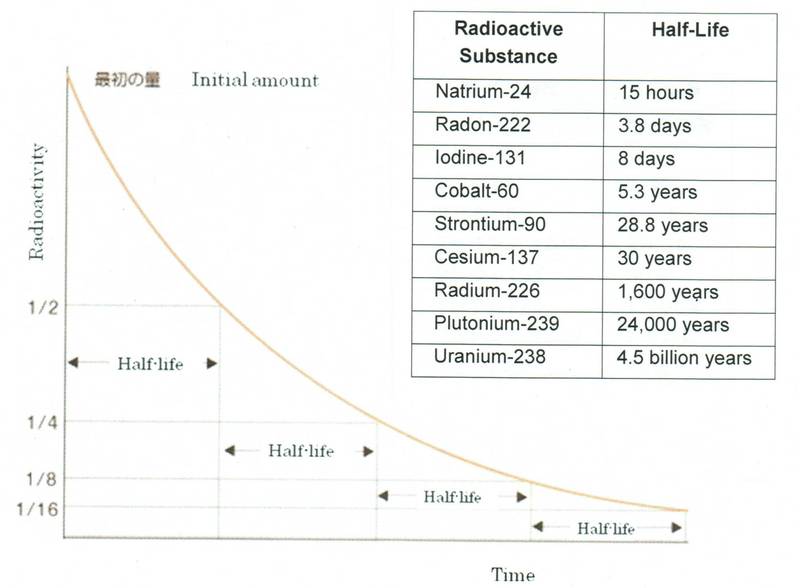
“Half-life” refers to the time it takes for a radioactive substance to lose half of its original strength. For example, the half-life of iodine-131 is eight days, while cesium-137 has a half-life of 30 years. It is often said that radioactivity dissipates over time, but it is important to remember that a substance retains half of its radioactive strength after its half-life has passed; after another half-life, it still retains one quarter of its original strength, and so on. We must also remember that until the Fukushima accident is fully under control, the reactors will continue to discharge radioactive substances into the environment.

What are the Effects of Radiation on the Human Body?
When the physical effects of radiation are discussed, it is common to hear the term “threshold.” The threshold is the standard value or permissible amount for the risk from exposure to radiation, and it is often said that being exposed to radiation below threshold levels has no effect on the human body.

However, it is not possible to assert that exposure below the threshold is “safe” or that it “has no effect on one’s health.” No matter how weak radiation is, it causes damage to human cells. Therefore, there is no such thing as a “safe level.” The more you are exposed to radiation, the greater the danger of damaging one’s health.

In fact, a committee of the National Academies of Science in the US issued a report in 2005 that concluded that there is no threshold: the risk of exposure exists in direct proportion to the amount of exposure, beginning at low levels. Minimal exposure represents a potential danger to humans. Even the International Commission on Radiological Protection (ICRP), which uses measurement techniques that underestimate internal exposure and low-level radiation exposure, supports this “linear no-threshold model” and acknowledges that doses of radiation under the threshold of 100 millisieverts annually still increase the risk of developing cancer. In other words, it is now accepted wisdom internationally that, even at low levels, radiation affects the human body.

As a consequence, the proper approach when thinking about radiation is not to say, “It’s OK to be exposed to this amount,” but rather, “We should exercise the utmost caution, and avoid exposure to radiation to the furthest extent possible.”

What are the Effects on Fetuses and Babies?
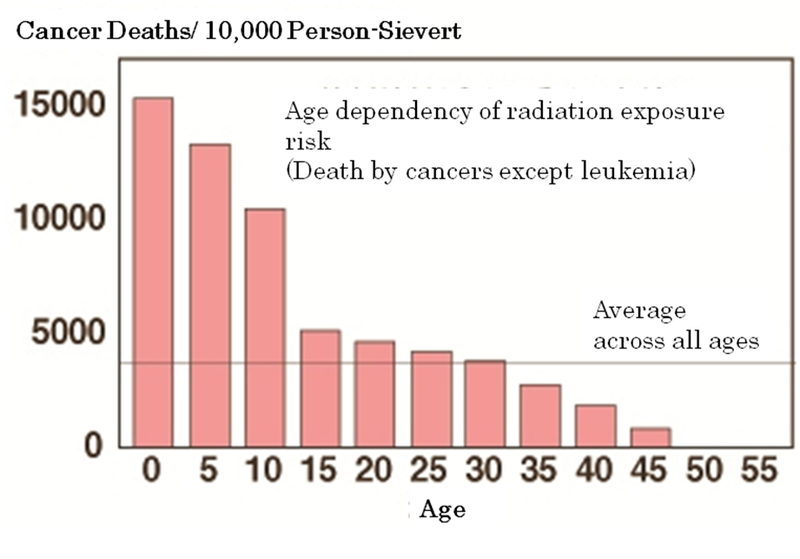
Fetuses, babies, and young children are far more susceptible to the effects of radiation than adults. It has been estimated that babies and infants are four times as vulnerable as adults in their 20s or 30s, so the risk of exposure is much greater. This is because cell division takes place much more vigorously in small children, so cells that are damaged by radiation are reproduced before they can be repaired.


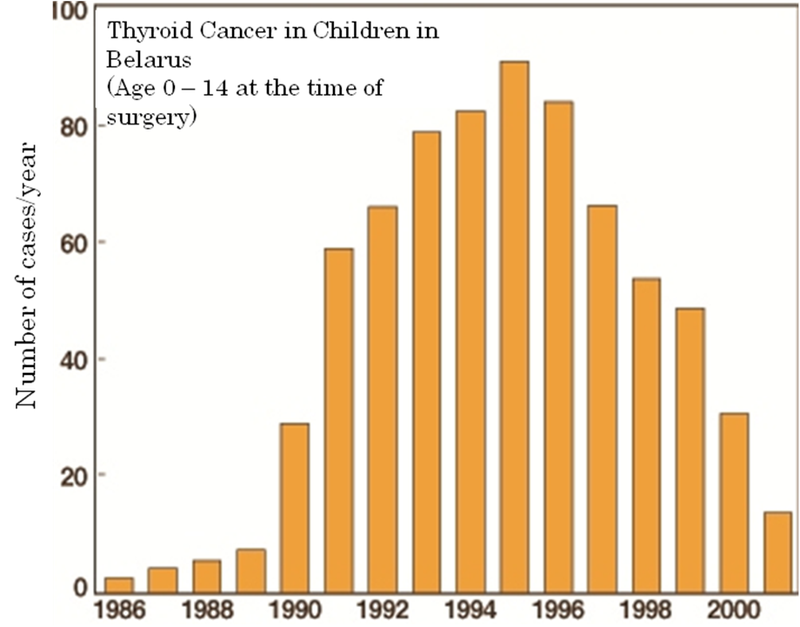
In Belarus, where the effects of the Chernobyl nuclear accident were most severe, the rate of thyroid cancer among children increased rapidly 5 to 10 years after the accident. One should not be reassured when the government announces that “there is no immediate health risk.”

Based on a lecture in Japan by M. Malko, “Assessment of Chernobyl Cancers in Belarus” (2003).

Why is “Internal Exposure” Dangerous?
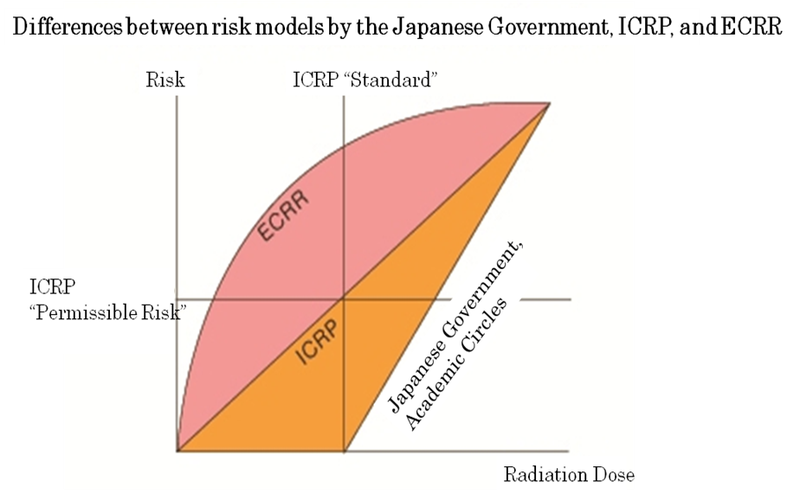
Exposure to radioactive substances outside of the body is referred to as “external exposure.” On the other hand, when tiny particles of radioactive substances are breathed into the lungs, or ingested through mother’s milk or cow’s milk, water or food, the exposure to this radiation is termed “internal exposure.” Internal exposure differs from the short-term external exposure caused by X-rays and CT scans, because the exposure is at a very close distance and it continues over a long period of time. This has led the European Committee on Radiation Risk (ECRR) to conclude that even low levels of radiation pose high risk.


Pink zone: Risk that the International Commission on Radiological Protection ignores.
Pink + orange zones: Risk that the Japanese governmnent and academic circles ignore.
Simply expressing radiation dose in sieverts is insufficient, as we need to know which nuclides are involved. Risk models are also affected by other variables, such as age, sex, genetic makeup, immunity, and time period, so the standard level is no more than an averaged-out, rough guideline. Matsui Eisuke, “Health Effects on Children of Internal Radiation Exposure,”Gekkan Hodanren, 6, No. 1067 (2011).
Radioactive substances that enter the body accumulate in various organs and continue to emit radiation. The chemical composition of the substances determines how they are absorbed by the body’s organs and how long they remain in the body (biological half-life). Iodine-131 concentrates in the thyroid, where it causes thyroid cancer. Cesium-137 is considered dangerous because it lodges throughout the body, in the bones, liver, kidney, lungs, and muscle tissue. Strontium-90 and plutonium-239 remain in the body for a long time, so once they have entered the body, they continue to affect it over the course of many years.


This diagram depicts the inhalation of plutonium, but the process is essentially the same for other radioactive isotopes. Iodine binds to thyroglobulin, the protein that forms the base of the thyroid hormone, so it concentrates in the thyroid and can cause thyroid cancer.


When the air and soil have been contaminated, the contamination first spreads to plants and agricultural products, and then to animals. Through the food chain, the radiation is carried from one animal to the next, until it reaches human beings. In many cases, the radiation becomes more concentrated through this process. Even if the nuclear accident is brought under control and radiation levels fall, highly contaminated food products may continue to enter the market in the future because of this process of biological concentration. It is estimated that iodine in the air becomes concentrated up to ten million times in plants and 620,000 times in milk. Cesium becomes concentrated five times in mollusks, and twenty times in other marine products.

The Contamination Zone
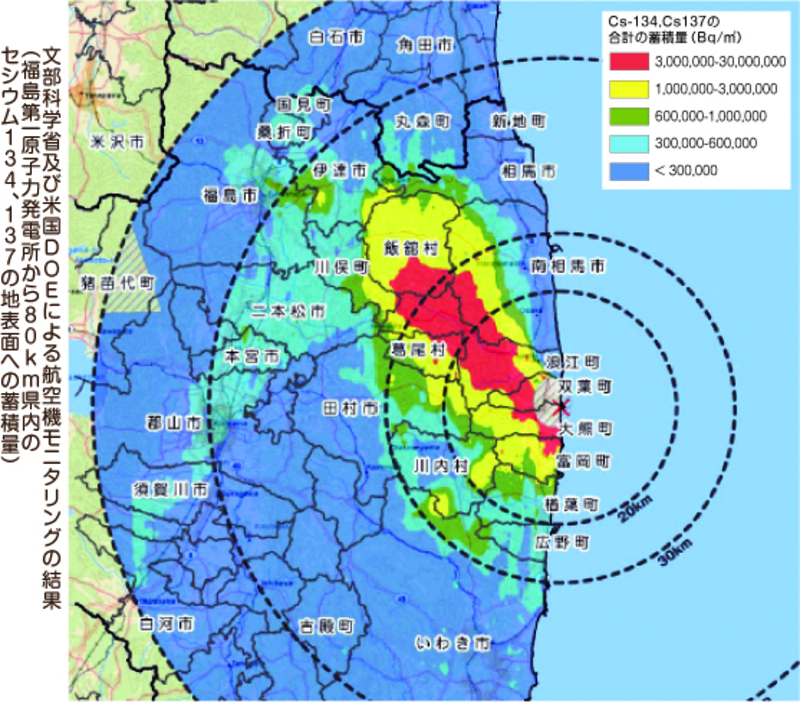
“Hot spots” are areas where rain and snow bring down radioactive substances from the clouds and where high concentrations of these substances are then detected. This applies particularly to the area downwind of a reactor; in the case of the Chernobyl accident, areas 300 kilometers downwind of the plant were contaminated. Because of this dispersal, it is necessary to put into place detailed countermeasures, utilizing the computer system called SPEEDI (System for the Prediction of Environmental Emergency Dose Information). Recently discovered “hot spots” are in the cities of Fukushima, Koriyama, Nihonmatsu, Date, and Iwaki.


The result of MEXT (Japanese Ministry of Education, Culture, Sports, Science and Technology) and the US Department of Energy’s aerial monitoring (accumulation of cesium-134 and cesium-137 within the 80 kilometer radius of the Fukushima Daiichi nuclear power plant).


In areas that are considered hot spots, national and regional governments must take measures to evacuate people, particularly pregnant women and young children. Government authorities must take responsibility for providing nursery schools, day care centers, and other schools in areas that are freer from contamination.
In areas outside of these hot spots, it is often suggested that parents need not be overly concerned about allowing their children to play out of doors. However, in Tokyo’s Suginami Ward, for example, the airborne radiation level was 0.13 microsieverts/hour on April 20, but it was as high as 6.39 microsieverts/hour on the surface of the ground. In addition, radiation levels rise during and after rainfall. In such areas, children should avoid getting wet in the rain. Since small children are especially vulnerable to radiation, great care should be taken; they should avoid going outside, and when they do, they should wear a facemask.

Radiation in Tap Water and Breast Milk
The government insists that the water supply is monitored to ensure its safety, but standards in Japan are dramatically higher than in other countries. On March 17, the government raised the standard for iodine-131 from 10 Bq/L (becquerels per liter) to 300, and the standard for cesium-137 from 10 Bq/L to 200. Further, under the Food Sanitation Law, the provisional guideline for liquids given to infants is 100 Bq/L; this level “poses no health risk,” even to infants under 1 year old.

However, standards for iodine-131 elsewhere in the world range from the World Health Organization’s 10 Bq/L to German Technical and Scientific Association for Gas and Water (DVGW)’s 0.5, with the US Environmental Protection Agency (EPA) maintaining a guideline of 0.111. In other words, Japan’s standard is 2,700 times higher than that of the US EPA in the case of iodine-131.

World Standards for Iodine-131 in Tap Water (Bq/L)
US EPADVGW
(Germany)
UkraineBelarusWHOJapan's Provisional Guideline
0.1110.521010300
(200 for cesium-137)
[100 for infants]

In addition, there is the problem of inadequate monitoring. The Bureau of Waterworks in the Tokyo metropolitan government, for example, publicly announced as “undetected” radiation contamination at levels less than 20 Bq/L until April 14. Until the government tightens safety standards, pregnant women, nursing mothers, and small children should use tap water only for bathing and washing clothes and dishes, in areas surrounding Fukushima Daiichi plant including the Kanto area. Avoid drinking tap water as far as possible, to reduce the risk of internal exposure to radiation.

As for breast milk, we cannot simply generalize that mothers should avoid breastfeeding, considering nutritional (immunity) and safety benefits of breast milk, especially when babies less than three-months old are concerned. According to a survey by the Breast milk Survey and Mother-Child Support Network, there were cases in which no radioactivity was detected in breast milk of mothers living in hot spots, while radioactivity was detected in breast milk of a mother in Mitaka, which is not a hot spot. Therefore, breastfeeding mothers should avoid internal radiation as much as possible, regardless of where they live. Also, increased testing of breast milk must be done in order to take appropriate protection measures.

Radiation in Food
First, since radioactive iodine is still being detected, we must abstain from eating leafy vegetables, herbs, and wild plants from contaminated areas. In particular, vegetables with broad leaves (spinach, lettuce, etc.) carry a high risk because they have large surface areas. The government is prohibiting the shipping of produce with radiation surpassing the standards, but on April 26, for instance, spinach produced in Chiba Prefecture was shipped despite a government ban. Further, the Food Safety Commission has raised the provisional standard for radioactive cesium in vegetables from 370 Bq/kg (previously set by the Ministry of Health, Labor, and Welfare) to 500 Bq/kg.

World Standards for Radiation in Food
IsotopeFood GroupUkraineBelarusUSCodex CommissionJapan
Radioactive IodineBaby food, drink  170100 (Total of five nuclides: Sr 90, Ru106, I129, I131, U236)100
Milk, milk products300
Meat, eggs, fish, etc.2000
Radioactive CesiumBaby food, drink40 (food for small children)371200 1000 (Total of eight nuclides: S35, Co60, Sr89, Ru103, Cs134, Cs137, Ce144, Ir192)200
Milk, milk products100100200
Vegetables40 (70 for fruits)100 (40 for fruits)500

Citing the uncertainty of the criteria for safety testing and regulation, the German Society for Radiation Protection recommends not giving food or drink that contain more than 4 Bq/kg of cesium-137 to infants, children, or young people.

Again, even if the nuclear accident is brought under control and radiation amounts return to low levels, biological concentration may result in highly contaminated food products still entering the market after the passage of some time. In order to prevent internal exposure to radiation, it is necessary to tighten the safety standards, increase testing for radiation, and thoroughly enforce bans on shipping contaminated produce. Of course, the government and Tokyo Electric Power must compensate farmers and other producers for the losses suffered by bans on the shipping of contaminated produce.

Summary of Protection Measures
Here we summarize the protection measures that have been suggested. It is difficult even for specialists to agree on such measures, and these steps will not necessarily ensure one’s safety. Rather, they are no more than some areas where we can exercise caution in our daily lives. In giving first priority to safety, evacuation measures taken by the national and local governments are an indispensable element of prevention, to protect the lives of children. Evacuation must be seen as a right, with the government bearing the burden of moving expenses and employment measures, rather than something that is the responsibility of the individual.
Below is a list of temporary measures that individuals can take.
Air: This applies particularly to areas that are contaminated hot spots.
  1. Remain indoors as far as possible. Keep outside air from entering (It is difficult not to use air conditioners, fans, or to keep windows closed in the summer time. Some air conditioners allow very little outside air to come indoors. Please consult with manufacturers).
  2. When you go outdoors, wear a facemask or cover your mouth and nose with a towel.
  3. Wear a hat, do not expose skin, and wear a jacket that will not collect dust.
  4. Before entering the house, with the facemask still on, brush dust off your clothing.
Even outside of hot spots, radiation is highest during and after a rainfall. In areas surrounding the Fukushima Daiichi plant including the Kanto area, avoid getting wet in the rain. Avoid going out. Wear a facemask.

Breastfeeding: We cannot simply generalize that mothers should avoid breastfeeding, considering nutritional (immunity) and safety benefits of breast milk, especially when babies less than three-months old are concerned. Regardless of whether breastfeeding mothers live in hot spots or not, it is necessary to minimize internal radiation exposure and to increase the testing of mother’s milk in order to develop appropriate protection measures.

Tap water: Until the government tightens safety standards, pregnant women, nursing mothers, and small children should use tap water only for bathing and washing clothes and dishes. It should not be used for mixing formula. Avoid drinking tap water as far as possible.

Food: For the time being, abstain from eating leafy vegetables, herbs, and wild plants from contaminated areas. Also avoid milk, meat, and fish, which can be highly contaminated due to bioaccumulation. It is necessary for municipalities and schools to thoroughly disclose where food comes from, and increasing the testing of radioactivity in food is urgently required.

In Conclusion
Since March 11, many people have found it difficult to relax in their normal lives, out of concern for earthquakes and the nuclear accident. At the same time, we are told repeatedly, “There is no need for excessive worry, which is actually bad for your health.” Or, “There is absolutely no problem with food on the market.” Or, “Misinformation and rumors are causing harm.” Some of us may feel that we are the only ones who are worried, or that those around us think that we are being alarmist.

However, it is only natural to be concerned. With radiation, it is not possible to say, “You’ll be fine as long as you limit your exposure to this level.” We do not understand with any certainty the physical effects of radiation. If we assign the highest priority to safety, then exercising utmost caution and adopting the strongest preventive measures is not out of line. It is the obvious thing to do.

But it is also true that there are limits to the preventive measures that individuals can adopt. No matter what you do, if there are radioactive materials present, you will be exposed. The best possible route is to remove oneself as far as possible. Those who can evacuate should do so. It is very dangerous for those people in highly contaminated areas of Fukushima to remain there. Policies and measures for evacuation should be implemented to the furthest extent possible.

It is best not to worry over radiation in isolation. There are many people living close by who share your concerns. It is important to talk with these people, to make connections, and to provide mutual support.

The nuclear accident and the scheduled power outages that followed have caused us to think a great deal about our own lives and the problems of electricity and energy. If we didn’t have nuclear power plants, we wouldn’t have to be concerned like this about the risks of radiation.

Japan is beginning to reconsider its nuclear energy policy. The Hamaoka nuclear power plant in Shizuoka, which is at risk of causing a catastrophic radiation disaster if the predicted Tokai earthquake occurs, has already stopped operation. The time has come to think about how society could function without relying on nuclear energy.

What is the SAY-Peace Project?

SAY-Peace Project is a non-profit organization run by young people in their teens and 20s, who have come together under the slogan "Solidarity among the Asian Youth for Peace." We provide a space for young people to learn about, think, and act for peace. We engage in a variety of activities with the aim of bringing about peace, from Asia, through dialogues about disarmament and history.

Contact information:
SAY-Peace Project
Coop Matsuo #103, Daizawa 5-7-8, Setagaya-ku, Tokyo 157-0032
Tel/Fax 03-4413-3929 E-mail: mail@saypeace.org Home page:SayPeace.org.

Dr. Matsui Eisuke, editorial supervisor

Born 1938. Director, Gifu Environmental Medicine Research Institute. Previously taught radiology at Gifu University School of Medicine. Japanese Respiratory Society certified specialist. A special member of the Japan Lung Cancer Society and the Japan Society for Respiratory Endoscopy. One of the few specialists in Japan to address the problem of internal exposure to radiation. Matsui has been involved for many years with class-action suits over the certification of atomic-bomb victims, and has also written extensively on the health effects of asbestos. His latest book is Mienai kyôfu: Hôshasen naibu hibaku (Invisible Terror: Internal Exposure to Radiation) (Junpôsha, 2011).

Tuesday, May 31, 2011

malaysiakini: Lynas RIA: Public 'safe' from radiation... by Joseph Sipalan

Lynas RIA: Public 'safe' from radiation
Joseph Sipalan
malaysiakini, May 30, 2011, 4:50pm


Authorities today released a radiological impact assessment (RIA) on the Lynas Advanced Material Plant (Lamp), which declared the project as safe, just as an international review panel went through its second day of study into Lamp's safety aspects.

The RIA, put on a month-long public display today, together with the project's environmental impact assessment (EIA), says the plant's operations "would not cause undue radiological risk" to the public and its future workers.

The report - carried out by national nuclear agency Nuklear Malaysia - says the public will receive zero mili-siverts (mSv) of radiation from the plant, while workers will receive an average of 13 mSv of radiation annually for the first 10 years of the plant's operations.
NONE 
What this means is that the people should not encounter any radiation other than that already present naturally in the environment surrounding the Lamp, while workers will face levels far below the danger threshold of 50 mSv per year.

"Based on the results of the (RIA), it is concluded that operation of the plant will not (cause) any radiological risk to the workers and members of the public living in the surrounding areas of the site beyond what is allowed by the regulatory authority," the report says.

The report highlights seven “exposure scenarios” where radiation contamination could potentially happen, but says there will be little to be worried about, even in a worst-case scenario.

The exposure scenarios cover shipment transfer at Kuantan Port, transport from the port to the plant, exposure from stockpiles, processing equipment, residue storage and discharge of gas and liquid effluents.

'Negligible exposure'
In the various exposure scenarios outlined in the report, the RIA says the collective dose of radiation will be negligible for workers – who will have far greater proximity to the raw material and waste products – and have even less of an effect on the public.

In one worst-case scenario, where a truck transporting raw materials between the Kuantan Port and the facility tips over, the report estimates that radiation exposure would be around 0.01 mSv per hour at a distance of one metre from the materials.

“If cleaning work requires a single person to spend five hours, the estimated total dose received is still very small, i.e. 0.05 mSv,” the report says.

The internationally accepted public exposure level is 1 mSv per year.
NONE 
Factoring in Lynas' plan to use clay and plastic-lined temporary storage cells to store waste on-site and industry standard methods to treat waste water and gas emissions, Nuklear Malaysia is of the opinion that the waste produced will have little or no impact on public radiation exposure.

Radon and thoron contamination readings at about one kilometre from the plant will be “very low”, at 0.02 micro-Sv per year and two micro-Sv per year respectively, the report says.

The RIA also says the people will not suffer any increase in radiation exposure by drinking water or eating fish from the nearby Balok river system, despite plans to release treated waste water from the plant into the river.

An estimated 5.1 million litres of treated waste water will be released into Balok daily – enough water to fill more than two Olympic-sized swimming pools every day.

The plant will also release around 478,800 cubic metres of gas emissions into the atmosphere over a decade of operations, a sufficient volume to send at least 217 four-man hot air balloons soaring in the sky.

Nothing finalised yet
Though Nuklear Malaysia gives a relatively glowing assessment of the proposed Lynas plant, it emphasises at the end of its report that the report should be revised as and when more operational data become available.

It noted that this is to make sure the estimated doses obtained in the current assessment can be further refined and that “the conclusion derived from this assessment is indeed realistic and acceptable”.

The report points out that it is “very important” to use site-specific data to get a realistic estimate of radioactivity from the plant, but acknowledges that site-specific data is “not readily available” – leading to their decision to use “default values” obtained from generic data sets “recommended internationally and they have been designed to give conservative dose overestimate(s).”
 
Nuklear Malaysia recommends that the input data and information on the report be updated and finalised, “in particular, the radioactivity content of the lanthanide concentrate materials and WLP (water leach purification) residue and water discharges.”

Monday, May 30, 2011

Lynas panel revealed: Independent, you say?.... by SM Mohamed Idris

Lynas panel revealed: Independent, you say?
SM Mohamed Idris
May 30, 2011, 1:51pm
It was on May 14 that the Minister for the International Trade and Industry (MITI), Mustapha Mohammed announced the independent panel to review the proposed Lynas rare earth processing plant in Gebeng, Pahang.

Since the review involves environmental and public health and radiation safety issues, concerning a hazardous facility, it does not fall under the jurisdiction of the MITI.

We are thus puzzled why MITI was tasked with announcing the review panel members, bearing in mind that a preliminary environmental impact assessment was submitted to the Department of Environment (DOE) in the Ministry of Natural Resources and Environment in 2008.

We are also puzzled as to why an independent Malaysian authority was not responsible for the appointments of each of the nine members of the review panel. A more suitable and impartial body like the DOE should have helmed the selection process instead of the Atomic Energy Licensing Board which as it turns out delegated the entire responsibility to the International Atomic Energy Agency (IAEA).

The IAEA's main interest is to promote nuclear energy and its related activities worldwide. Whereas the DOE was set up to protect the environment and promote environmentally sustainable activities.

The public is told that the 'independent panel' members are experts in their respective disciplines but no information on the detailed competencies of each of the panel members is given. In any appointments to committees of such nature, it is standard requirement that individual CVs of members are provided.

However a search on the profile of each member of the 'independent panel' has confirmed our worst fears that they are not really as independent as they have been made out to be.

Five of the nine panel members are staff of the IAEA namely,
  • Dr Tero Varjoranta (Finland), Director of the Division of Nuclear Fuel Cycle and Waste Technology, IAEA Department of Nuclear Energy. Dr Varjoranta is head of the review panel.
  • Dr Magnus Vesterlind (Sweden), Head of the Waste and Environmental Section, IAEA.
  • Dr Horst Monken Fernandes (Brazil), staff member of the Wastes Technology Section, Division of Nuclear Fuel Cell and Waste Management
  • Ms Hanna Kajander (Finland), Communications Officer, IAEA
  • Hiroko Ratcliffe (Austria), Administrative Assistant, IAEA
The five external experts are:
  • Jan van der Steen (Netherlands).
    An engineer by training, he was the Manager of Radiation and Environment Session at NRG, Arnhem.
    NRG (Nuclear Research and Consultancy Group) is the nuclear service provider in the Netherlands. From its website NRG states: 'Our products and internationally renowned expertise are frequently called on by both governments and industries…
    Another aspect of our work is our durable focus on safety of nuclear reactors and attractive options for nuclear waste management, including recycling technologies. We are engaged in applied research enabling nuclear energy to become more sustainable. Examples include research into fourth generation nuclear energy systems, and nuclear fusion technology.'

    At NRG, we believe that nuclear technologies are essential for a sustainable society. And we are committed to devote all our energy to it.'
  • Dr Leo M. Lowe (Canada)
    He has a doctorate in Nuclear Physics, and is Principal Consultant, Senior Health and Environmental Physicist, SENES Consultants Ltd. The company has worked with IAEA. 'SENES clients have included uranium mining companies, uranium refineries, fuel fabrication facilities, nuclear power plants operators, numerous industrial clients, industry associations and federal and international agencies and regulators.'

    'SENES provides a broad scope of services related to the management of low-level radioactive wastes. These include: the conceptual design and assessment of disposal facilities; assessment of impacts on contaminated environments; design of remedial measures for contaminated sites; and supervision of contaminated material removal.
  • Dr PM Balagopala Pillai (India)
    He is a scientist at the Bhabha Atomic Research Centre (BARC). He was Head, Health Physics Unit, Indian Rare Earths Ltd plants in South India. He has served as a consultant to the IAEA.
  • Dr Dennis Wymer (UK)
    A mechanical engineer, he has worked for the IAEA from 1993 to 2009. Prior to this, he was involved in the South African mining industry. In a paper in 2001 representing the Chamber of Mines of South Africa, he presented environmental monitoring data for the radiological impact from the gold uranium mining industry and its wastes. These data were used to calculate doses for members of the public.

    His paper states: '[...] It is concluded from these results that the impact of gold mining operations on the environment is small, and will not cause any member of the public to receive a radiation dose more than about 10% of the public dose limit. Current rehabilitation measures for tailings are mainly limited to vegetation and reworking of slopes.

    It is unlikely that the costs of constructing radon barriers would ever be justified on the basis of the minimal dose reduction benefits that could be achieved. Some measures to control surface water pollution may continue to be necessary but, from present knowledge, contamination of ground water is unlikely to be of concern. [...]' (excerpt from the abstract)

  • Mr Ulric Schwela (Finland)
    Currently Technical Promotion Officer at Tantalum-Niobium International Study Center, Metals & Mining Consultant and Contractor, Radioactive Materials Transport Adviser, Blackpool, United Kingdom. He has a degree (BSc) in Chemistry, and has worked with the IAEA on projects.
Despite its international composition, the members of the review panel are all linked to the nuclear industry. They are trained in the physical and engineering sciences and have no known expertise in public health, radiation safety, environment and socioeconomic issues.

What is even more troubling, the external experts are consultants working for nuclear companies which exist for commercial purposes. The job of a consultant is primarily to bring in projects and profits for the companies he/she works for. Thus they are all proponents of the nuclear industry.

In the context of radiation safety, public health and the environment, it is imperative to involve individuals who are independent of nuclear establishments and nuclear related industries.

In the interest of transparency, accountability and credibility, we urge the Malaysian government to form a comprehensive and integrated review panel.

This review panel should comprise real independent experts on public health, radiation safety, medicine, environment, law and the social sciences.


SM Mohamed Idris is president of Consumers Association of Penang and Sahabat Alam Malaysia

Thursday, May 26, 2011

MMA’s Grave Concern on the Possible Hazardous Health Effects of the planned Lynas Rare Earth Refinery Project in Gebeng, Pahang.... By Dr David KL Quek


MMA’s Grave Concern on the Possible Hazardous Health Effects of the planned Lynas Rare Earth Refinery Project in Gebeng, Pahang
By Dr David KL Quek
President, MMA


The Malaysian Medical Association (MMA) is gravely concerned as to the possible deleterious health effects from radioactive and other toxic waste residues of the proposed Lynas Rare Earth Refinery Project to be located in Gebeng, Pahang.

We share the public concern that not enough information, attention or due diligence to public safety has been provided, before even the approval of such a huge and contentious project would have been made. Worse, this projected plant touted as the ‘largest’ Rare Earth Refinery in the world (when fully functional) is located so close to human habitation!

It is with much surprise and dismay that most Malaysians hear of this rare earth refinery plant only when it was first disclosed in a New York Times article, a few months ago. Clearly for a controversial project of such a sheer size, there should have been greater importance placed on exhaustive public information sharing and engagement, public safety guarantees, environmental impact studies, and prudent if impregnable long-term waste disclosure and disposal management, versus simply, ‘economic’ gain.

That such a project has been allowed to be developed, to near completion all these many months, in ‘surreptitious’ concealment or without adequate and forthright disclosure, is troubling and unconscionable!

No monetary returns of whatever Foreign Direct Investment and its spinoffs can outweigh possible radiation and/or other health risks, which can wreak harm on our citizens, perhaps for as long as the half-lives of some of the extremely toxic radionuclide waste products—which in some cases might be ‘forever’! Thorium-232 for example has a half-life of some 14 billion years, and gives off alpha particles. This radionuclide residue is recognized as being extremely hazardous for humans and life forms!

Thorium is an acknowledged waste product from the planned Lynas refinery of rare earth ores. Due to the various refining processes, Thorium will be enriched and concentrated to levels, which could reach quantities that are difficult to contain or be safely sequestrated.

Disclosed data from the Lynas projections, estimate that a total of 106 tons of thorium waste would be generated every year. Based on the preliminary Environmental Impact Agency report, Thorium residues would be some 1655 parts per million (ppm), from the total 64,000 tons of Water Leached Purification (WLP) process. This would lead to a sizable radioactivity dose of some 62 Becquerel per gram (q/g). For 106 tons, this would be an enormously humongous quantity of radioactive residual Thorium!

We are therefore extremely concerned that there are no foolproof containment measures for such toxic residue treatment and disposal, despite Lynas’ public proclamation of “Zero Harm” commitment. The myriad refining processes themselves also yield many hazardous products which can unalterably damage the environment, contaminate water catchment areas, agricultural land, and nearby river and seawater food chains.

Where would such hazardous wastes be kept or contained, and how can the public be protected from such a continuing pile-up of more than 100 tons of radioactive Thorium, year on year? What about other toxic wastes, and contaminated water sources?

In a recent report China’s Rare Earth Elements Industry: What Can the West Learn? (March 2010), Cindy Hurst—an analyst from the Institute for the Analysis of Global Security (IAGS)—states that statistics from Baotou, where China’s primary rare earth production occurs, show that “all the rare earth enterprises in the Baotou region produce approximately ten million tons of all varieties of wastewater every year” and most of that waste water is “discharged without being effectively treated, which not only contaminates potable water for daily living, but also contaminates the surrounding water environment and irrigated farmlands.”

Never mind the other mind-boggling wastes and contaminates, radioactive Thorium in itself is worrying enough. Thorium can be inhaled via contaminated dust or swallowed from contaminated food or water. A Human Health Fact Sheet, from the Argonne National Laboratory (August 2005), states that even when very small quantities of Thorium are ingested, the amounts in the human body are not harmless, because Thorium continues to emit harmful and damaging radiation particles.

There is no safe level of residual Thorium, particularly if the isotope is unstable. Even when about 0.02 - 0.05% of ingested Thorium is absorbed into blood stream it is quickly deposited in: Bone (70%, biological half life 22 years), Liver (4%, biological half life 700 days), other organs & tissues (16%, biological half life 700 days), with only about 10% excreted. This phenomenon is known as ‘internal emission’ which then gives rise to continued harmful effects of internal radiation which can lead to possible cancers, leukaemias and other genetic mutations and organ damage.

Deliberations of the Committee Examining Radiation Risks from Internal Emitters (CERRIE), an independent joint UK Department for the Environment, Food and Rural Affairs and the Department of Health (2001-2004) attest to and validate the authentic risks of internal irradiation (Report of the Committee Examining Radiation Risks of Internal Emitters, 2004). 

Low-level radiation is certainly not harmless. This committee attributed the persistent excess of leukaemia in young people in Seascale, to the nearby nuclear reprocessing plant in Sellafield, West Cumbria, Britain. CERRIE concluded that “all but one member of the Committee believe that the low level intake of radionuclides leads to some increased risk of adverse health effects as a result of the internal irradiation of organs and tissues.”

As pointed out by Dr CK Chan, that lone minority report argued even more robustly that there is “strong biological and epidemiological evidence that current models of hazard from radioactivity inside the human body underestimate risks by at least 100 and possibly up to 1000 times.” 

This excess occurrence also reinforced the anomalous excess in infant leukaemias recorded in several European countries following the Chernobyl meltdown. This Sellafield nuclear reprocessing plant was subsequently shut down due to public pressure!

The US National Academy of Sciences BEIR VII report has also concluded that, no dose of radiation is safe, however small, including background radiation; exposure is cumulative and adds to an individual's risk of developing cancer. Thus, it is artless to ask the public to accept that environmental radiation already exists and thus might be inconsequential to health. Our remit is why should we add on to the potential hazards when this is manmade and almost certainly uncontainable?

Worse still, the lingering memory of the disastrous Mitsubishi Asian Rare Earth mine in Bukit Merah, Perak (1980s), continues to rankle and infuriate many of the hapless victims and their families as well as the residents living in the area. We understand that up to today, cleaning up processes are supposed to be ongoing (is it?), but few if any details have been disclosed as to the current state of this huge human and environmental contamination.

Its forced closure in 1992 did little to assuage the anger and sense of betrayal of the public! No amount of compensation would be sufficient to correct the harm and anguish of those who had suffered. The residual toxic effects among those who do not know better, have not been studied or factored in. One bad experience on such a similar project must necessarily alert the authorities that more must be done in order to prevent another possible recurrence!

Although some information on the industrial process and waste management plans for the Lynas Gebeng rare earths plant have been disclosed, there remains insufficient safeguards and incomplete reassurances that the potential radiation risks from the toxic wastes are negligible or nil. Thus, concerned citizens cannot simply be dismissed as being Luddites with “irrational fears of nonexistent threats”. We repeat that these risks are real and not imagined!

There can be no denying the fact that our Malaysian public is deeply troubled with all things radiation, particularly in the wake of the recent Earthquake-tsunami damaged Fukushima nuclear power plants, even in previously respected if scrupulous Japan. Consider the cynical if understandable view that if even in meticulous ‘zero defect’ Japan things can go wrong, what more to expect from Malaysia where our maintenance culture is arguably and famously suspect!

The Fukushima-Daichi catastrophe continues along its seemingly uncontainable denouement. Despite earlier reassurances, the out of control radiation leaks, rapid and widespread contamination of water sources and crops and the continued cascading meltdown of one nuclear power plant after another, has now shown the devastating severity and reality, the dangers of anything nuclear, when unpredictable if catastrophic events occur. (What more if these radiation wastes are projected to be within residues, which cannot be disposed of or contained as in the planned Lynas rare earth refinery?!)

This shocking truth contrasts starkly with the conversely downplayed if disingenuous systematic cover-ups of the management of the Tokyo Electric Power Company (TEPCO). Conflicted owners and companies are not known to be fair in their judgement and pursuance of truth and public safety, hence it is not surprising that our own Malaysian public seek and deserve more accurate information and reassurance from all authorities involved in approving or rejecting such a project.

Although we welcome the new high-powered expert panel (most if not all are from the IAEA) to review the safety of the Lynas project, there remain many troubling uncertainties. We and the public also share the concern of CAP president SM Mohd Idris, that members of this expert panel may not be truly independent or impartial, because all of them appear to be pro-nuclear power and energy.

There are no independent health, NGO and environmental experts who should have been included to provide balance and input on the most pressing problems with the Lynas project, i.e. its potential health effects and toxicity to residents and the environment, and how to meaningfully contain the inevitable wastes.

Importantly, there must even be consideration to halt the project once and for all, if the company cannot provide all such guarantees. We cannot mortgage the future of our citizens for some few pieces of ‘silver’, no matter how tempting! The means do not justify the ends, when human lives and public safety are at stake.

The government and authorities must not turn a deaf ear to the legitimate concerns of our citizens. We share the staunch social good, precautionary principle that mandates every responsible government and/or international agencies to make every effort to address even the most unlikely worst-case scenarios, and potential ‘black swan’-type of catastrophes.

We must only make informed and thoroughly comprehensive decisions for the public at risk, always predicating and affirming on ultimate human benefit and safety, instead of uncertain material or economic gain.

We urge the government not to rush the decision on this potential minefield of toxic danger for all Malaysians.

Monday, May 23, 2011

malaysiakini: Lynas plant rushed ahead before radiation study.... by SM Mohamed Idris

Lynas plant rushed ahead before radiation study
SM Mohamed Idris
May 23, 2011, 1:46pm
 
 
The Lynas plant in Kuantan is unravelling into a nightmare. The lanthamide concentrates (rare earths) from Australia that Lynas will import into Malaysia contain thorium AND uranium, which suggests the processing in Kuantan will produce massive amount of radioactive wastes.

Further, there appears to be a serious disconnect in the entire review process of the Lynas plant. There seems to be two separate approval processes i.e. the Environmental Impact Assessment (EIA) under the DOE (Department of Environment) within the Ministry of Natural Resources and Environment(MNRE), and the Radiological Impact Assessment (RIA) under the Atomic Energy Licensing Board (AELB) within the MOSTI (Ministry of Science, Technology and Innovation).

Unknown to the public the poorly done Preliminary Environmental Impact Assessment (PEIA) for Lynas does not cover the radiation and health concerns. In fact, the PEIA does not explicitly mention the exclusion of radiation aspects from the scope of the EIA in its Introduction. Instead, the exclusion is specifically mentioned only in the later chapters e.g. in Chapter 8 on 'Summary and Conclusion' (page 8-13).

In addition, the PEIA mentions a Radiological Impact Assessment (RIA) but not in a clear manner. For example, in Chapter 2 of the PEIA, it states that, “The Malaysian Nuclear Agency [MNA], the radiological consultants appointed by Lynas are presently in the midst of determining radiation safety issues pertaining to lanthamide concentrate storage, handling and transport.”

At the end of Chapter 3, the PEIA states for the first time that wastes produced in the plant operations are radioactive and that their storage will be done according to the recommendations based on the MNA's 'Radiological Impact Assessment' carried out for the project (page 3-7).

The Lynas project was fast tracked for approval by the Pahang State DOE, within two or three weeks of submission. The DOE received the PEIA on Jan 21, 2008 and approved it in early February.
For such a complex project involving radiation hazards with a very vague waste management, storage and disposal proposal, the speedy approval raises serious questions.

This is especially when the PEIA was submitted and approved, the RIA on radiation safety issues was still in the process of being written by the MNA for submission to the AELB. In light of this, our concerns are as follows:

Firstly, how could the PEIA recommend the 'build' option (page 3-8) when the radiation safety issues have not been considered? How could the state DOE have approved the PEIA in such haste?

Note that in the PEIA, the waste management proposal is vague and inadequate. They include the following:
  • the space for underground wastes storage cells is very limited due to the groundwater being extremely close to the surface;
  • the ground is susceptible to subsidence as it is a former peat swamp area;
  • the release of dangerous wastes into Sg Balok and subsequently into the sea;
  • the dangerous and toxic radioactive wastes which are supposed to be carefully stored onsite in special ponds and storage cells but then schizophrenically proposed to be re-used as fertilisers, concrete, plasterboards, for roads, etc (page 5-58, 59).
Secondly, the fact that there is an RIA independent of the PEIA means that there are now two independent and parallel impact assessments in existence. This is setting a dangerous precedent in the entire review process.
Under Malaysia's environmental laws, the DoE is the primary coordinating authority on issues related to the environment and its impact on the well being of its citizens. The MNA and AELB are promoters of nuclear technology and this may give rise to conflicts of interests as MNA is the consultant that wrote the RIA for Lynas.

Thus, how effective will the DoE be in achieving its mandate to protect the environment and the well being of the people? How independent and autonomous is the DOE from the MNA-AELB?
Will DOE'S policies and decisions be subservient to the interests of the AELB? Will DoE have to relegate its role to the AELB in nuclear matters and issues related to radiation and its impacts? These questions have a crucial bearing on the credibility of the Lynas review process.

Thirdly, what is the RIA assessment and approval procedure under the AELB? While the general EIA process under the DOE is widely published and publicly available (e.g. on the DOE website), in comparison, the RIA process remains completely unknown and uncharted territory.

Which governmental agencies were on the RIA approval panel? What are the criteria for the RIA assessment? Why is the RIA or its contents not available for scrutiny by independent experts?

Fourthly, Lynas is required to apply to the AELB separate licences for siting, construction, importation of radioactive materials, onsite storage of radioactive wastes, temporary operation, and permanent operation. It is unclear if Lynas has all the licences to operate. AELB has said only siting and construction licences were approved.

Fifthly, the poorly done PEIA also lacks a proper socio-economic assessment. No costs-benefits assessment (CBA) was performed. The major reason given in the PEIA for the built option recommendation for the Lynas project is the large financial and economic benefits promised.

The lack of proper socio-economic analyses and CBA invalidates the recommended built option. For example, what are the values assigned for people's health, tourism, fisheries and other industries in the area and what happens when these are affected by the Lynas project?
One should also consider examples of the long-term health impacts of the Asian Rare Earth case in Perak, and the rare earths industry in China.

These are critical issues that need to be addressed concerning the Lynas project. Given the above, CAP and SAM recommend that:
  • The Lynas project be stopped in order to address the issues, including the Wastes Management Plan, which an Australian mining expert reported as being 'yet to be disclosed by Lynas';
  • A transparent, integrated assessment be done for projects requiring both EIA and RIA. This would prevent a PEIA or DEIA (detailed EIA) being approved while not knowing the full radiological safety impacts in an RIA;
  • A DEIA be legally required for any project that requires an RIA, thus ensuring a more thorough review process. This is only logical, considering less hazardous activities require detailed environmental impact assessments. Further, unlike a PEIA, a DEIA makes public participation mandatory;
  • Proper socio-economic analyses be a requirement for all EIAs, whether preliminary or detailed;
  • Politicians (state and federal) should not make claims that controversial projects are safe as unqualified political endorsements make the project approval process political, very biased and dangerous.
SM Mohamed Idris is president of Consumers Association of Penang and Sahabat Alam Malaysia

Sunday, May 22, 2011

Lynas Chairman disingenuous and partonising about Gebeng Plant... by Dr Chan Chee Khoon

Lynas Chairman disingenuous and partonising about Gebeng Plant

by Dr Chan Chee Khoon

Dear Editor,
 
Nick Curtis the executive chairman of Lynas is not just disingenuous, but also patronising when he declares that “our job is to be very transparent to the community, give them the facts and encourage them to deal with those facts and think about the facts and know that the plant is safe.”
 
In other words, the Kuantan community, having been deprived of key information on the industrial process and waste management plans for its Gebeng rare earths plant, is also being accused of irrational fears of nonexistent threats.
 
Lynas, in dismissing the health hazards of low-level radiation at its Gebeng plant, has conveniently ignored the deliberations of the Committee Examining Radiation Risks from Internal Emitters (CERRIE), an independent committee established by the UK Department for the Environment, Food and Rural Affairs and the Department of Health (2001-2004) following concerns over the risks of internal irradiation. 
 
This committee was set up by the Labour minister for the environment Michael Meacher in 2001, in the wake of the persistent excess of leukaemia found among young people in Seascale, near the Sellafield nuclear reprocessing plant in West Cumbria. The excess occurrence was beyond what was predicted based on existing radiation risk models, subsequently re-inforced by the anomalously sharp increases in infant leukaemia recorded in several countries in Europe after the Chernobyl disaster.
 
The committee in particular was instructed to review the adequacy of the existing radiation risk models (principally based on empirical evidence from external irradiation e.g. Hiroshima and Nagasaki atomic bomb blasts, medical X-rays of foetuses in utero) for health risks arising from irradiation by ingested or inhaled internal emitters.
 
While the committee did not arrive at a consensus on the severity of health hazards from internal emitters, “all but one member of the Committee believe that the low level intake of radionuclides leads to some increased risk of adverse health effects as a result of the internal irradiation of organs and tissues” (Report of the Committee Examining Radiation Risks of Internal Emitters, 2004, p.117, para. 22).  A minority report argued that there is “strong biological and epidemiological evidence that current models of hazard from radioactivity inside the human body underestimate risks by at least 100 and possibly up to 1000 times”. 
 
The intensity of radiation from a radioactive particle situated a meter away from a human body is increased a trillion fold when it is ingested or inhaled and sits within a micron of the body's organs and tissues (inverse square law).  (This is highly pertinent to Lynas’ operations because the thorium-containing rare earth ores from Mt Weld will be milled to a fine powder for acid extraction at Gebeng, and both raw materials and residual solid wastes, when dry, will produce fine suspended, respirable dust particulates).
 
Lynas, along with the Atomic Energy Licensing Board, the Department of Environment, Nuclear Malaysia (and the International Atomic Energy Agency?) seems to be oblivious to these deliberations.  They have recklessly abandoned the precautionary principle which would require responsible governmental and international agencies to address worst case scenarios such as that highlighted by minority opinions in expert panels which do not arrive at consensus positions.

Chan Chee Khoon, ScD (Epidemiology)
ckchan50@yahoo.com